How Can Florists Reduce Waste From Unsold Flowers?
Florists can reduce waste from unsold flowers by ordering carefully, keeping stems in good condition, and finding uses for them before they fade. Donations and composting can help with flowers that cannot be sold, but preventing surplus is the first step.
Order with the counter in mind
Keep a simple record of what comes in, what sells, and what is left at the end of the week. Note the type of flower and how many stems remain, not just the total number of bunches. A full bucket of one color can tell a different story from a few leftover stems across several varieties.
Use those notes when placing the next order. Consider regular orders, upcoming events, and the space available for storage. Ordering smaller quantities more often may help some florists match stock to demand, although delivery schedules and minimum orders can limit that option.
Talk with suppliers about available quantities and delivery days. A clear picture of what can be ordered, and when it will arrive, makes it easier to plan without filling every bucket on the off chance it will sell.
Care for flowers and use them creatively
Clean buckets, fresh water, and suitable storage conditions help flowers stay in good condition. Check stems daily and remove leaves that would sit below the water. Keep an eye on flowers that arrived first so they can be used while they still look their best.
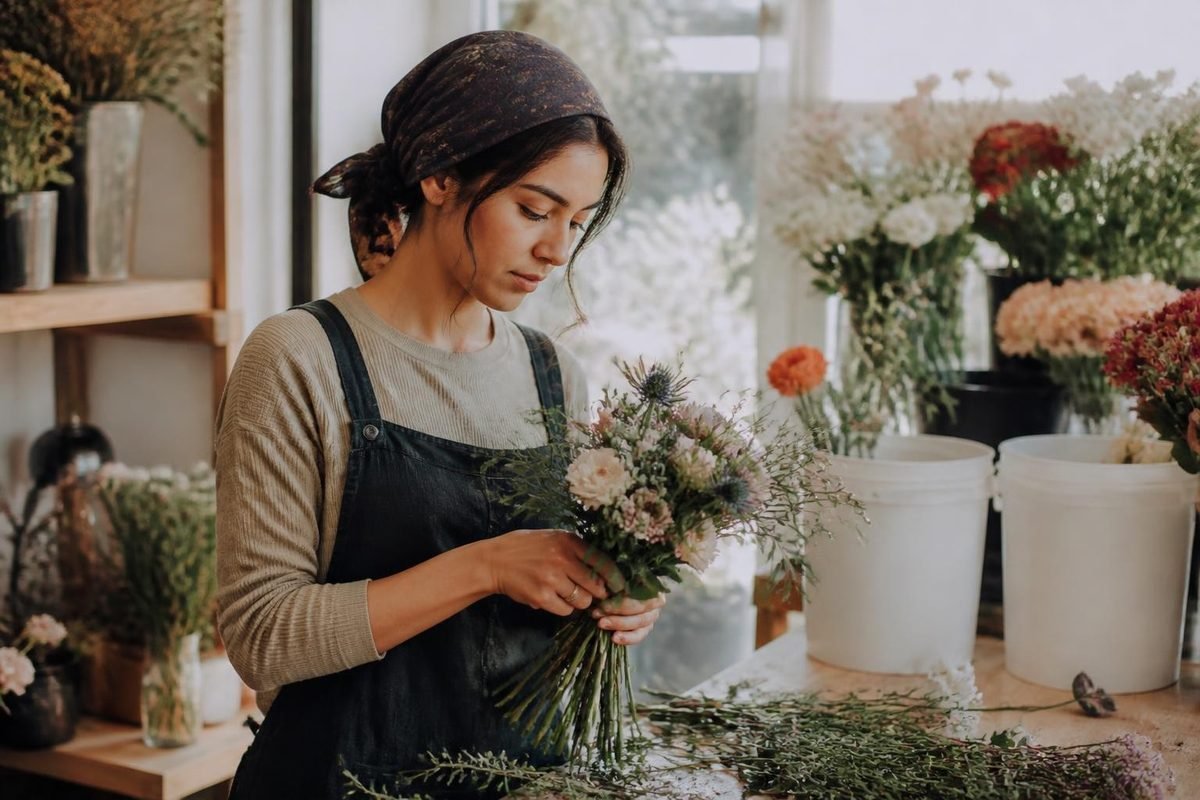
At the workbench, a few good stems left from an event need not become waste. They might suit a small arrangement, a single stem display, or a mixed bunch, provided they are still fresh enough for the customer to enjoy.
- Group compatible leftover stems into small mixed arrangements.
- Offer suitable flowers for workshops or practice sessions.
- Ask customers if they are open to a florist's choice arrangement.
- Dry suitable flowers for later use when their condition allows.
Be honest about the condition of every arrangement. Flowers that are already fading are not a good choice for a gift that needs to last.
Plan for flowers that do not sell
Make a plan before the end of the day, while usable flowers still have time to reach someone. A local community group, care home, or charity may welcome donations, but ask first about its needs and any rules for accepting flowers. Agree on a collection time so the bunches do not sit waiting in a back room.
For plant material that can no longer be used, check local composting guidance. Remove ribbons, wire, foam, and other nonplant materials before placing suitable stems and leaves in a compost collection. Rules vary, so confirm what the collector accepts.
Questions florists may have
How often should stock be reviewed?
A daily check helps staff spot aging flowers. A weekly review of sales and leftovers can inform the next order.
Can every leftover flower be dried?
No. Some flowers dry more successfully than others, and damaged or decaying stems are poor candidates.
Should all unsold flowers be donated?
Donate flowers that are still suitable to display, and confirm that the recipient can use them.
Is composting better than preventing surplus?
Composting can handle suitable plant waste, but ordering and using flowers carefully can prevent that waste in the first place.
Read next: original source